Voice Control in 2026: Gemini, Alexa+ and Siri for Singapore Homes
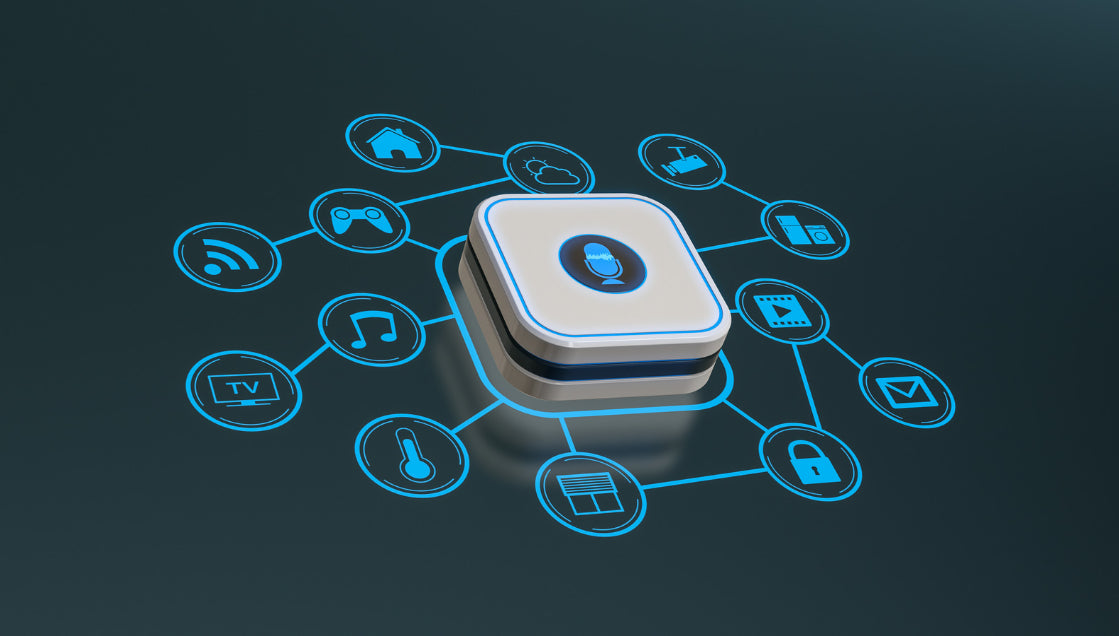
Short answer: Google Assistant was retired in 2026 and replaced by Gemini, whether owners asked for it or not. Alexa+ rebuilt itself on generative AI. Siri's overhaul keeps slipping. If a software decision made overseas can change how your lights turn on, the voice assistant was never the important part of your smart home. The hub is.
If you bought a smart speaker in Singapore any time in the last decade, something changed this year that you did not choose.
Google began replacing Assistant with Gemini on Android phones and tablets from 4 September 2026, through mandatory app updates. Nest speakers and displays are moving to Gemini for Home. Amazon rebuilt Alexa on generative AI and opened Alexa+ to its US customer base in February. Apple's generative Siri has been delayed repeatedly.
Three companies, three rewrites, and not one of them asked the people whose homes depend on them.
Where the five assistants stand in 2026
| Assistant | What happened | Where it stands |
|---|---|---|
| Gemini for Home | Replaced Google Assistant on phones from September 2026, with Nest speakers and displays following | Rolling out by country in stages, starting with the US, UK, Australia, New Zealand and parts of Europe |
| Alexa+ | Amazon's generative rebuild of Alexa, opened to US customers in February 2026 | Still the broadest device compatibility of the group |
| Siri | The generative overhaul has been delayed more than once | Historically the widest language support, strong on privacy, weakest for smart home control |
| Bixby | Still running, now a voice assistant only after Samsung retired the wider Bixby suite | Samsung devices only, and a short language list |
| XiaoAI | Deeply tied to the Xiaomi device ecosystem | Mandarin-first, and built around Xiaomi hardware rather than a mixed home |
Why your speaker feels worse than it did three years ago
This is not nostalgia. The decline is documented.
An Android Authority survey of thousands of readers found around seven in ten Google Home users reporting that their devices were no longer reliable. An XDA review in April 2026 found assistants failing at simple tasks, with an early Alexa+ adopter reporting failures on commands as basic as switching on a light.
The pattern is consistent. Devices that worked for years began misunderstanding commands, responding slowly, or doing the wrong thing entirely. Then the replacement arrived, and in many cases a generative assistant wanted to hold a conversation when the owner simply wanted the fan off.
Voice assistants: what they are good at, and what they are not
None of this makes voice control useless. It makes it a convenience rather than a foundation. The honest balance:
| What voice does well | Where it falls down |
|---|---|
| Hands free. Cooking, carrying a child, hands full or wet. No switch to reach for. | Always listening. The microphone is live, waiting for a wake word, and recordings have been reviewed by people before. |
| Accessibility. For anyone with limited mobility, speaking is far easier than crossing a room. | Internet dependent. A cloud assistant with no connection is an ornament. |
| One way in. A single phrase can trigger a whole scene across many devices. | Rigid syntax. The command must match what was programmed, word for word. |
| Personalisation. Wake words, routines and responses can be shaped around the household. | Accents and dialects. A strong accent or a mixed-language sentence derails it quickly. |
Read that right-hand column again. Three of the four problems disappear the moment the automations live on a hub in your home instead of a server overseas.
The part that matters more in Singapore
Your ah ma speaks Hokkien. Your uncle speaks Mandarin. Your helper speaks Tagalog. The assistants speak English, and they expect it in a particular shape.
Language support has always varied between them, and none of the mainstream assistants handle the way Singapore households actually speak: a sentence that starts in English, picks up a Hokkien word, and ends in Mandarin.
Researchers at Johns Hopkins University spent a month recording older adults using voice assistants in their own homes and found that conversational breakdowns were common, that attempts to correct a misunderstanding often made it worse, and that many errors were never resolved. Their study describes an error snowball effect: the user rephrases, the assistant misreads the rephrasing, and eventually the person stops trying.
That is the real failure mode of a voice-first smart home. Not that it breaks, but that half the household quietly stops using it.
This is the problem we built our AI layer to solve, and it is why "just use voice commands" was never good enough as an answer. A system that understands intent does not need you to remember that the light above your bed is called Master Bedroom Ceiling Light 2.
Voice is the front door, not the house
Here is the distinction that gets lost in every assistant comparison.
The assistant is an input method. It turns speech into an instruction. What happens next, whether the instruction reaches your lights, whether your evening scene runs, whether anything works at 2am when the fibre drops, is decided by the hub.
If your automations live in a company's cloud, that company owns your home's behaviour. It can change the assistant, change the features, or change the country list, and your home changes with it.
If your automations live on a hub in your own flat, the assistant becomes what it should have been all along: one of several ways to talk to a system that already works without it. Our switches, sensors and curtain motors run on a local Zigbee mesh, and the hub processes everything on site.
Drop the internet in our showroom and the lights still work. That is not a feature we market. It is the baseline we think every home should have.
You do not have to pick one
Most comparison articles end by telling you to choose an assistant and commit your home to it. We think that is the wrong question.
Because the automations sit on the hub rather than inside any one assistant, a Home-A-Genius system can work with Google, Alexa and Siri at the same time. One family member uses the assistant on their phone, another uses the speaker already in their room, and the rules behind all of it stay in one place: a single rule engine, not four apps disagreeing with each other.
That also means switching assistants later costs you nothing. If Gemini arrives properly in Singapore, or Siri's rebuild finally lands, you add it. You do not rebuild your home around it.
What to do if you already own a Nest or Echo
- Do not throw it out. A speaker is still a perfectly good microphone and a perfectly good speaker. The question is only what it is allowed to control.
- Move your automations off the assistant. If your "goodnight" routine is built inside the Google Home or Alexa app, it is only as stable as that app. Rebuild it on the hub.
- Keep voice as one input among several. Wall switches, app, schedule, sensor trigger. Voice should be the convenient option, never the only one.
- Check who in your home has stopped using it. If one person gave up on voice control six months ago, that is the signal. The system is not serving the household.
Frequently asked questions
Is Google Assistant really gone?
Google began replacing it with Gemini on Android phones and tablets from 4 September 2026 through mandatory updates, and Nest speakers and displays are following. Older devices keep most features, but the classic Assistant experience is being retired.
Which voice assistant is best for a Singapore smart home?
For device compatibility, Alexa has historically been the broadest, and Siri has supported the most languages. But the more useful question is what happens when that assistant changes or goes offline. An assistant sitting in front of a local hub is a convenience. An assistant that is the smart home is a dependency.
Can I use more than one voice assistant in the same home?
Yes, when the automations live on a hub rather than inside one assistant's app. Different family members can use different assistants in different rooms while the rules stay in one place.
Will my smart home stop working if the voice assistant breaks?
On a cloud-dependent setup, often yes. On a local hub, no. Automations, scenes and schedules continue to run on site, and your switches keep working as switches.
Are voice assistants a privacy risk?
They listen continuously for a wake word, and recordings have been reviewed by human staff in the past. Keeping your automations and your device data on a local hub limits how much ever leaves the house.
Can my parents use a voice-controlled smart home if they do not speak English?
Not reliably with the mainstream assistants, which expect English in a specific command format. This is one of the main reasons we built an AI layer that understands intent rather than syntax.
Do I need a smart speaker at all?
No. A well-designed system runs on sensors, schedules and switches, and most of the automations you actually value never involve speaking. Voice is a good addition to a system that works. It is a poor foundation for one that does not.