Smart Switches vs Smart Bulbs: Which Should You Choose for Your Singapore Home?
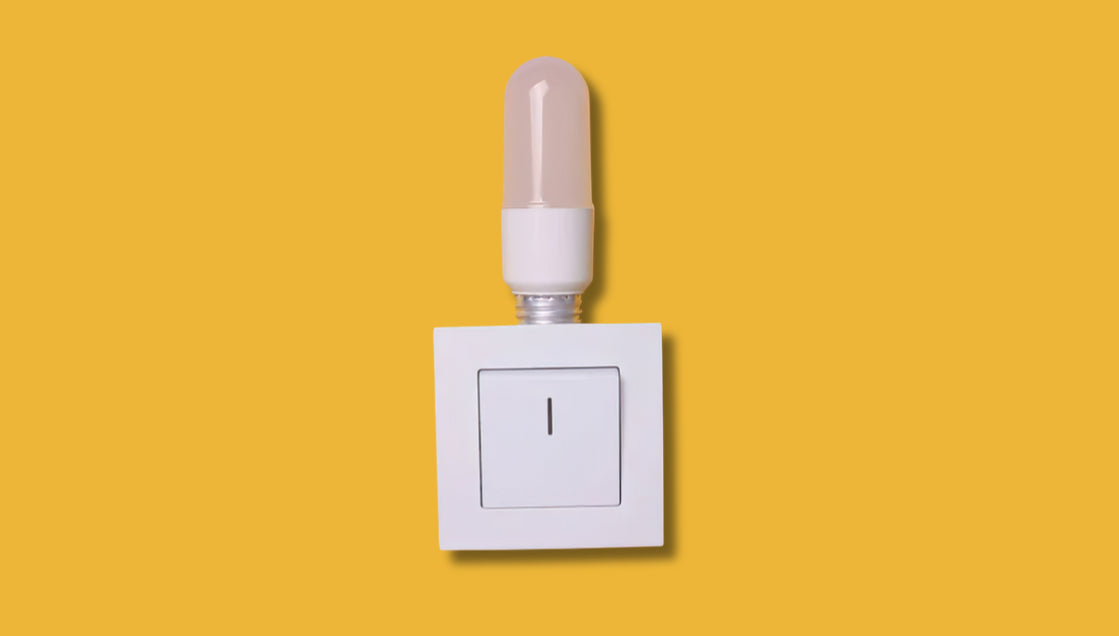
Short answer: Smart switches for general lighting, smart bulbs where you want mood. A smart switch controls a whole lighting circuit from the wall, the app or an automation, so it's the practical base for most whole-home setups. A smart bulb adds dimming, white-temperature and colour control to one light, but it needs its power left on to work. Most Singapore homes do best with a planned mix of both, as long as the switch and bulb are set up so one doesn't cut off the other.
What Is a Smart Switch?
A wall switch (or a module behind it) that puts a whole lighting circuit under app, schedule and automation control.
- Adds smart on/off control to ordinary lights without replacing every bulb
- Controls groups together: six living room downlights on one circuit become one tap
- Does not make ordinary lights dimmable or colour-changing. That needs compatible lighting, drivers and controls
Watch for wireless scene switches, which send commands to a hub, rather than switch the electrical load. Different job, same name, so check what a provider means by "smart switch."

What Is a Smart Bulb?
A bulb with its own control electronics, connecting over Wi-Fi, Zigbee or Thread.
- Depending on the model: brightness, warm-to-cool white, colour, scenes and schedules
- Individual control: two lamps in the same room can run different settings inside one scene
- An easy start for a table or floor lamp
Two limits:
- Not every fitting takes a replaceable bulb. Integrated LED fixtures need a different solution
- A smart bulb needs its power left on to receive commands. Flip the conventional wall switch off, and app control and automations stop until power returns

Smart Switches vs Smart Bulbs: The Everyday Differences
| Smart switch | Smart bulb | |
|---|---|---|
| What it controls | A whole lighting circuit | One bulb |
| Wall-switch control | Familiar. Family and visitors press the wall switch as usual | Works, but a conventional switch left in place can cut the bulb's power. Needs wireless controls or a power-maintaining module |
| Dimming, colour, white temperature | Only with a compatible smart dimmer + dimmable light + suitable driver | Yes on supported models |
| Installation | Installer checks wiring, wall-box space, load and whether a neutral wire is needed. No-neutral options exist but compatibility must be confirmed | Often swaps in without wiring changes. Check fitting, size and fixture suitability |
| Who installs | An EMA Licensed Electrical Worker for switches and fixed wiring | You, in most cases |
| Cost logic | Cheaper where many lights only need to switch together | Cheaper where you want individual control over a few lights |
Don't assume a product labelled "smart" supports every lighting effect. The combination of dimmer, bulb or LED driver, and electrical load decides what works.
On cost: compare circuits and bulbs, not one product's price. Six downlights that only switch together are cheaper to control at the circuit. Six lights that should behave differently can't be. And include hubs, accessories, installation and configuration: a low-cost bulb isn't always the lowest-cost whole-home answer, and a switch isn't automatically cheaper for every room.
Source: EMA: Engaging Licensed Electrical Workers
Can You Use Smart Switches and Smart Bulbs Together?
Yes, if the switch doesn't cut the bulb's power.
A conventional relay-style smart switch kills power to everything on its circuit. If that includes smart bulbs, they go unreachable. Two ways around it:
- A supported detached or decoupled mode, where the switch sends commands without disconnecting the bulbs
- Wireless scene controls or dedicated modules that keep power on while sending the lighting command
Don't assume any smart switch can do this. Confirm the exact switch, bulb, hub and operating mode before buying. The goal for a mixed setup: physical controls work naturally without breaking the automations.
Source: Philips Hue: in-wall solutions that keep bulbs powered
Which Should You Choose for Each Room?
| Room | Start with | Add | Watch for |
|---|---|---|---|
| Living room | Smart switch on general ceiling lights | Smart bulbs or controllable lighting for a floor lamp or accents | A movie scene that kills general lighting but keeps accents on needs the system to support those exact devices |
| Bedroom | Smart switch for main lights, controlled from entrance, bedside or a bedtime routine | Smart bulbs in bedside lamps for individual dimming or adjustable white | Nobody should have to dig through an app to turn off a lamp when tired |
| Kitchen and service yard | Smart switch for dependable on/off | Sensors and schedules, if they suit the room | Lights that go off mid-cooking aren't an improvement |
| Rental or existing home | Smart bulbs and wireless controls, no fixed wiring changes | A wider retrofit only after the existing installation is assessed | Renters need permission before any fixed electrical change |
Will Either Option Work Without the Internet?
Depends on the system, not on switch vs bulb.
Some setups run supported automations on a local hub inside the home. Others rely on cloud services for particular functions. Home-A-Genius runs core automation logic on an in-home hub, so supported local routines continue during an internet outage. Remote access, internet voice services and cloud integrations still need connectivity.
Before committing, ask for a demo with the internet disconnected, but the local network up. Test physical controls, sensor-triggered lighting, and the scenes you'll use daily.
One distinction: an internet outage and a power outage are different. Local processing doesn't keep unpowered lights running.
How Home-A-Genius Helps You Choose
The most useful lighting plan starts with your home and routines, not a shopping list. We design and install around supported lighting, switches, sensors and other devices, and we plan how physical controls and automations work together, rather than treating each product as a separate purchase.
- Renovating: we discuss lighting circuits and control requirements with your ID and electrician early
- Existing home: we assess what can stay and where changes would improve everyday use
The aim isn't to make every bulb smart. It's to give each space the right level of control.
So, Are Smart Switches or Smart Bulbs Better?
Smart switches for practical circuit-level control and familiar operation. Smart bulbs where individual dimming, adjustable white or colour adds value. For many Singapore homes, a planned combination is the strongest option: switches for general lighting, selected bulbs or specialised lighting for atmosphere.
Before buying, confirm compatibility, wiring requirements, physical controls, and what works without the internet. Those details matter more than the feature count on the box.
Book a Home-A-Genius consultation to plan a smart lighting setup around your floor plan and the way your household lives.